
CORD
Relation constituted strongly enough to bear tension.
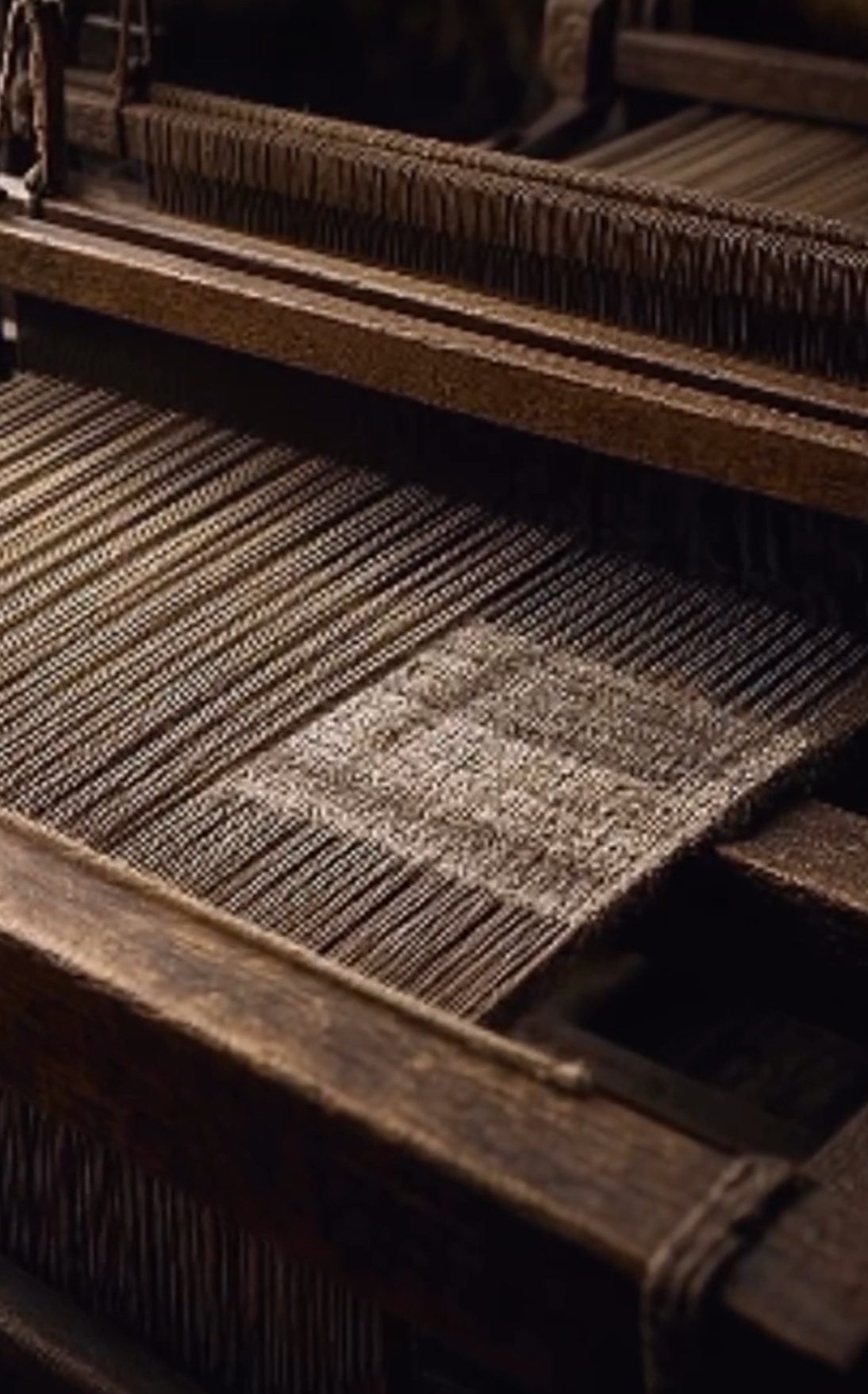
A cord is made from continuity.
Fibers gather.
Threads become related.
The relation acquires capacity beyond the isolated strand.
The cord does not create the points it connects.
It does not determine the load placed upon it.
It makes relation capable of carrying tension between them.
CONNECTION ≠ LOAD-BEARING CONNECTION
A cord may slacken, tighten, bend, lengthen, or change direction while remaining a cord.
Its significance becomes visible when relation is placed under load.
FIVE CUTS
ENGLISH — cord
A flexible length capable of connecting, binding, supporting, or carrying tension. Cord occupies useful ground between thread and rope.
ESPAÑOL — cuerda
Cord, rope, string. The word makes tension and load-bearing connection particularly visible.
Tensar la cuerda.
Tighten the cord.
FRANÇAIS — corde
Cord, rope, string. A flexible relation stretched between points and capable of carrying tension.
Tendre la corde.
Draw the cord taut.
ITALIANO — corda
Cord, rope, string. Flexible continuity becomes consequential when placed under tension.
Tendere la corda.
Tighten the cord.
DEUTSCH — Schnur / Seil
German exposes a useful distinction. Schnur tends toward cord or string; Seil toward rope and greater load-bearing capacity.
NOT EVERY CONTINUOUS CONNECTION IS CONSTITUTED TO BEAR THE SAME LOAD.
WHAT SURVIVES
Across the cuts:
FLEXIBLE CONTINUITY → CONNECTION → TENSION → BEARING
CORD — continuity constituted sufficiently to bear tension between distinguishable points.
In Isaiah's tent, the cord permits the fixed point to support what extends beyond it.
STAKE → CORD → TENSION → EXTENDED FIELD
The stake holds locally.
The cord carries relation outward.
A thread may be followed.
A cord may be loaded.